01
Meet
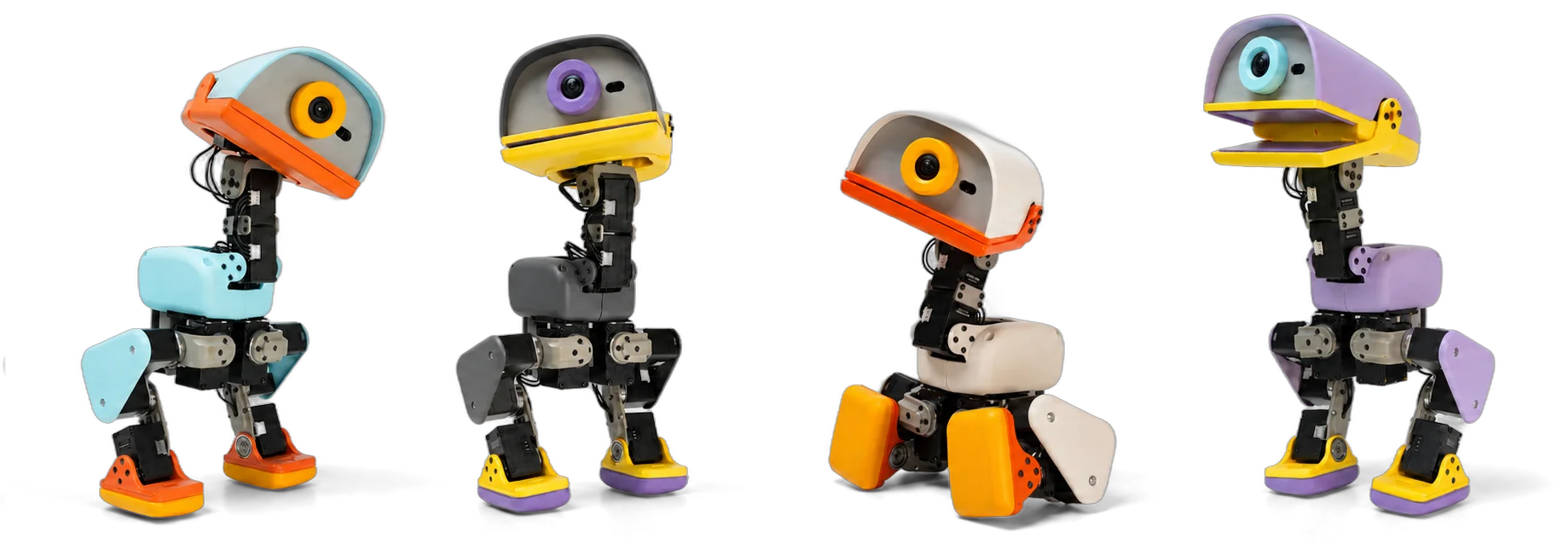
A 25 cm open-source duck family. Looks harmless. Waddles.
 Register
October 2, 2026 / livestreamed simulator sumo
Pro wrestling for reinforcement-learning ducks.
First rule: you don't quack about it.
Streaming live on YouTubeChannel TBA
The fighters
Every fighter starts as the same 25 cm open-source duck. What turns it into a contender is the policy — born cute, trained in the sim, sent to sumo for the belt.
A 25 cm open-source duck family. Looks harmless. Waddles.
Reinforcement learning drills ring control, pushing, dodging, recovery. Clip via @jpgallegoar on X →
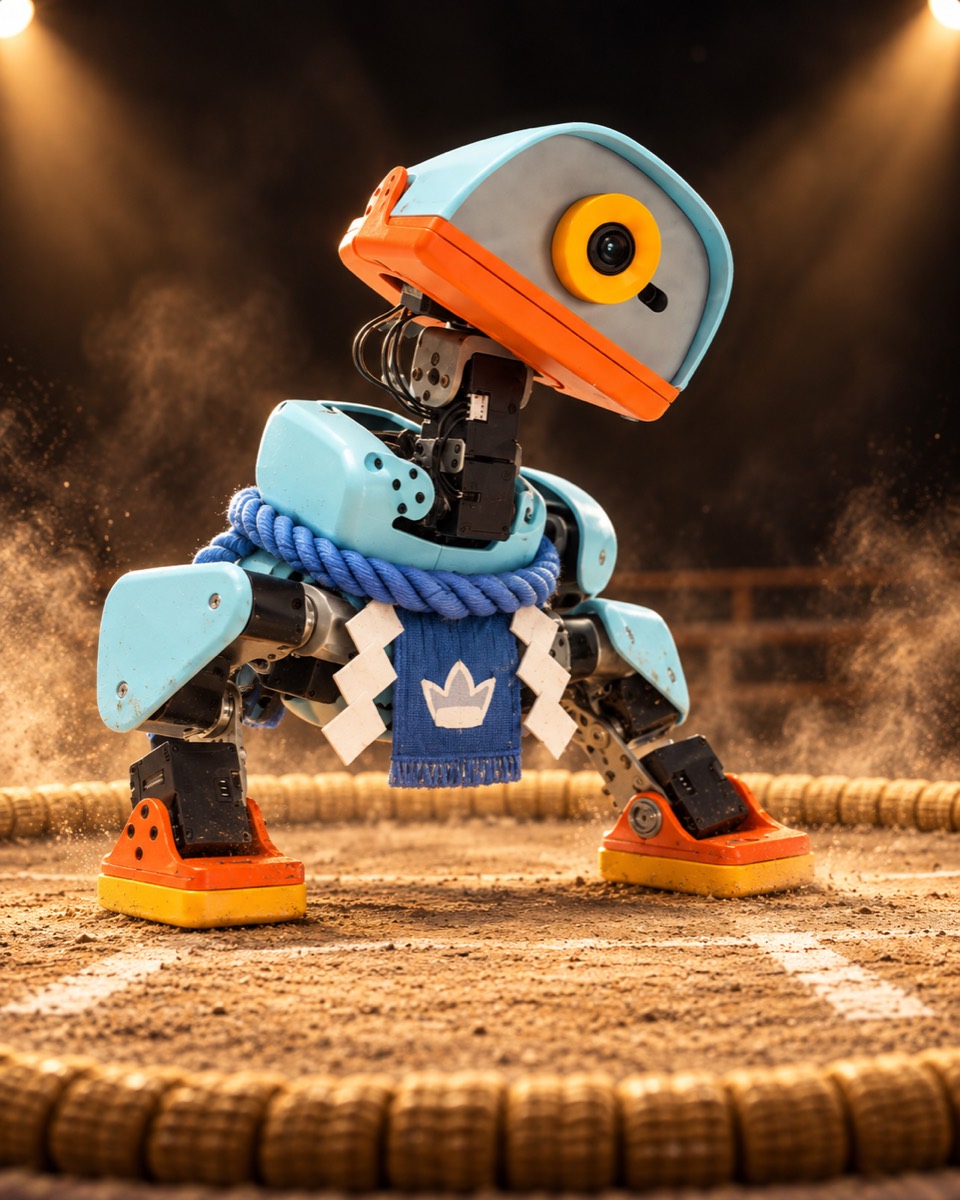
Best of 3 in the simulator. Last duck standing takes the Golden Beak Belt.
The bracket
A tighter card keeps the stream moving: four quarterfinals, two semifinals, and one final. Every team starts on equal footing.
Rules of the sim
The ring is a plain circle with a hard, high-contrast edge. Same spawn spots and the same physics every match, plus room on the boards for sponsors.
Every fight runs in the MicroDuck simulator, not with physical robots.
Each bout is best of 3 rounds — first policy to win 2 takes it; a 1:1 split goes to a decider.
A round is won when the opposing policy drives, trips, or gets pushed out of the circle.
Submitted policies must run at event settings and use the approved control interface.
Referee reset only for simulator faults, deadlocks, or unrecoverable spawn states.
Training camp
Teams write the controller that decides how their MicroDuck moves, balances, commits, feints, and recovers inside the simulator.
MicroDuck RL repoReinforcement learning turns scrimmage time into pushing, dodging, edge awareness, and last-second save behaviors.
MicroDuck simulatorFinal policies are submitted before QuackDown so the livestream can run fair, reproducible matches.
The title
The winner gets the Golden Beak Belt: a ridiculous, glorious simulator-wrestling prize for the policy that owns the ring.
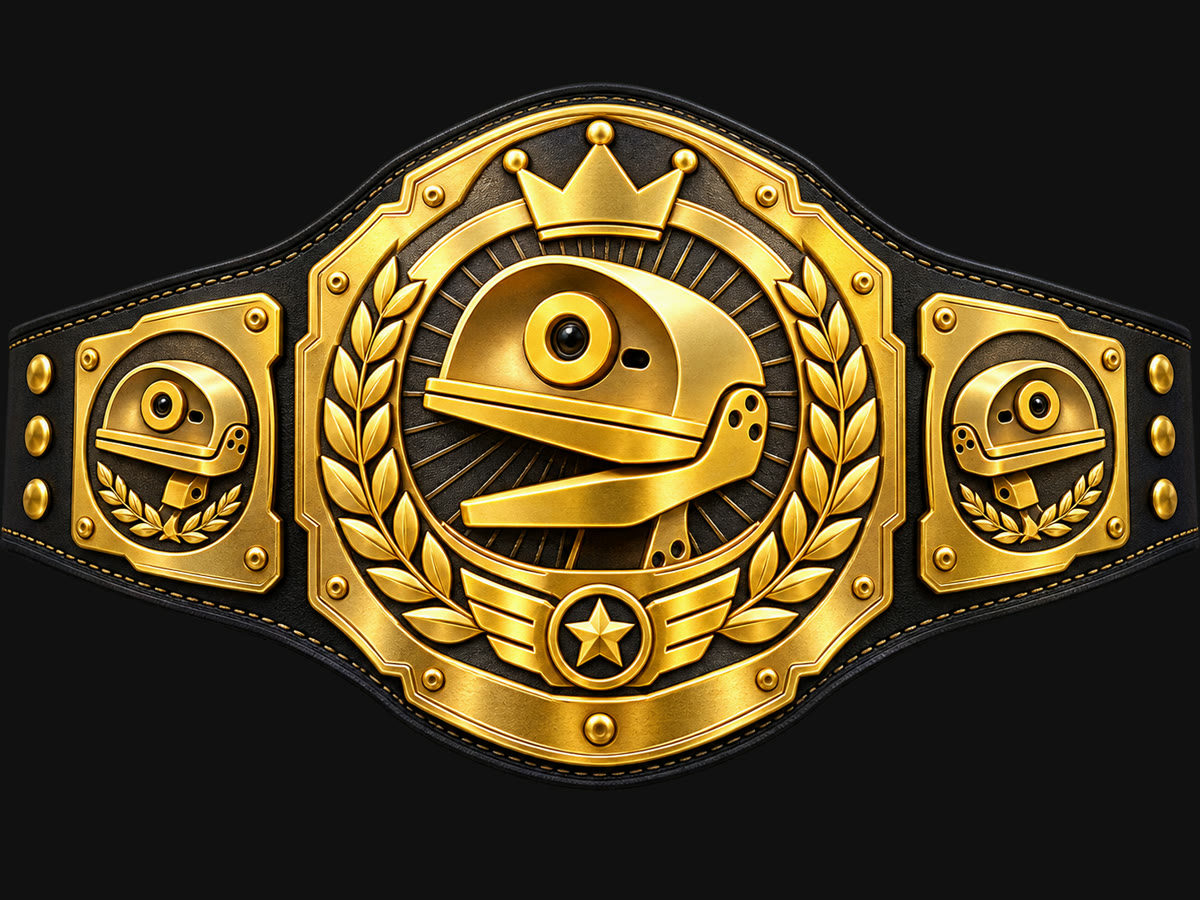
Awarded on stream after the final best of 3. The belt belongs to the team, but the bragging rights belong to the policy.
Register a teamSchedule
The 8-team roster goes live with shields, walkout names, and policy teasers.
Teams test movement, pushing, recovery, and ring awareness in public scrims.
Final RL policies are locked for inspection, reproducibility, and match setup.
Every first-stage matchup and the QuackDown path are revealed on stream.
Stanford vs. Berkeley runs as a side-card simulator waddle-off.
Streams live on YouTube — the broadcast crowns the first QuackDown Champion and awards the Golden Beak Belt.
Enter the bracket
Eight teams make the QuackDown card. Tell us who's fighting and how to reach you — we'll send simulator access, the policy submission window, and your bracket seed.
Sponsor the spectacle
Own a spot inside the QuackDown arena — the mat, the apron, or the back wall that renames the whole event. Spin the arena and pick a position.
Drag to spin · hover a slot · pick a position below
01 · Ringside boards
A ring of sponsor boards wrapping the whole fight floor — sell them as a set or one by one.
Ringside boards · 12 of 12 open
DuckFightClub by you — your name on the back wall, the stream slate, and the belt ceremony.
Own one match card, lower third, replay frame, and winner graphic.
Rotating placements for intermissions, scrimmage clips, and policy recaps.
Start a chapter
DuckFightClub is a format anyone can run. Bring the ducks to your city, conference, or lab — host a local showdown and put it on the map.
Dec 1–3, 2026 · at Paired Summit
RSVP on Luma →Date TBA
RSVP on Luma →FAQ
A livestreamed simulator fight club where MicroDuck control policies enter a robot sumo bracket and try to win QuackDown.
No — MicroDuck hardware isn't released yet. If we can get our hands on prototypes we'll fight them; until then the bouts run in the MicroDuck simulator, so teams compete with policies, not fragile hardware.
MicroDuck is Pollen Robotics' 25 cm open-source biped robot, built for makers to train, retrain, and deploy learned behaviors.
Teams write their own control policies and can use reinforcement learning to train ring control, pushing, dodging, and recovery in simulation.
Eight teams enter a single-elimination chart. Everyone starts in the first stage, so no team gets a bye and every policy has to fight its way to the belt.
Best of 3. Stay in the circle, force the other policy out, and keep the controller inside the approved simulator interface.
Yes. QuackDown streams live on YouTube (channel announced soon) and is built broadcast-first with match cards, replays, overlays, and sponsor placements.
Yes. Sponsors can own the mat center, a ring of apron boards, or the back-wall marquee that renames the whole event.
There is no cash betting. Friendly side wagers can use Codex or Claude quota, bragging rights, or other non-cash dev-world tokens. DuckFightClub does not operate a betting platform, hold wagers, or settle disputes. Quack responsibly.